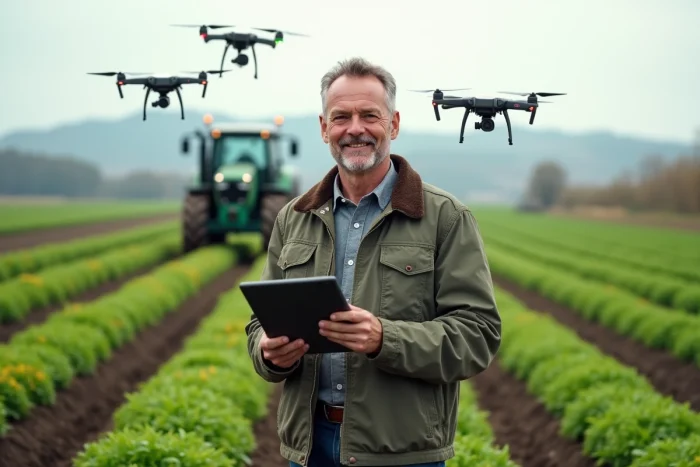
A connected humidity sensor can reduce water consumption by nearly 30% on a standard cereal plot. Since 2022, several European subsidy schemes require the integration of precision technologies to access certain aids.
In France, less than 15% of farms use agrivoltaics, while this model often doubles income per hectare in the affected areas. Agricultural modernization no longer depends solely on the size of the farm or the type of crop, but on access to innovation, technical support, and appropriate funding.
The major trends transforming agriculture today
Rapid transformation on the ground: the rise of agricultural technologies is taking place even in the most traditional farms. Smart sensors, big data tools, decisions driven by artificial intelligence: these new tools are reshaping the very way of producing, embedding themselves at the heart of agricultural practices. Now, real-time agricultural data provides a valuable adjustment power in the face of climate whims or changes in environmental regulations.
The adoption of these innovations is no longer limited to large farms. Today, small farms are embracing digital solutions that facilitate planning, irrigation management, or health monitoring. The choice of modernization also involves tools that adapt to the reality of each context, making sustainable agriculture more accessible.
In a context of increased climate change, agroecological transition is essential. Preserving soils, rationing water, reducing the footprint: this is becoming the guiding principle of decision-making. Innovating means giving breath to agricultural resilience, holding firm during droughts or when water is seriously lacking.
To move forward concretely, taking the time to discover Agri Systems solutions allows equipping oneself with tools derived from the latest research in the sector. Today, agricultural modernization consists of marrying experience, technological support, and long-term vision.
What innovative solutions are available to modernize a farm?
Precision agriculture is taking over from old management reflexes. Being reactive, reducing waste, and valuing every resource is possible thanks to precise tracking of data from sowing to harvest. Precision agricultural technologies are revolutionizing daily management: irrigation controlled to the millimeter, real-time tailored inputs, and responsiveness that limits losses.
Another strong evolution is the emergence of agricultural management software. Everything is included: interventions, stocks, traceability, and planning. Centralizing this information helps anticipate, prioritize, and make every decision an informed choice.
Here are some concrete examples of what these innovations allow:
- Optimize the use of plant protection products based on precise and evolving maps.
- Protect plots using connected systems that alert as soon as a risk arises and support quick decision-making.
- Plan crops based on predictive models that analyze an impressive amount of weather, soil, or plot-by-plot data.
Adopting innovation is not just about buying a tool: it’s about transforming the working method, staying attentive to economic and ecological developments, and fostering a long-term adaptation dynamic. Equipping oneself with these solutions is betting on an agriculture that is increasingly robust, clear-sighted, and anticipatory.
Funding mechanisms and climate adaptation: succeeding in the transition to future agriculture
Funding mechanisms now act as levers to build the agriculture of tomorrow. The recovery plan and the common agricultural policy (CAP) mobilize substantial funds to support this technological shift. With the calls for projects led by the Ministry of Agriculture, many farms are investing in new ways of working, whether it’s mastering water, reducing their consumption, or investing in future energy.
This dynamic of agroecological transition relies heavily on support. Farmers, supported daily, engage in agro-ecological projects with multiple objectives: reducing emissions, preserving biodiversity, and adjusting cultivation methods in response to climate variability. Official analyses, such as those from the Court of Auditors, remind us that efficiency should never come at the expense of environmental respect.
To better understand the focus of these mechanisms, here are the highlighted priorities:
- Minimize the use of inputs through data-driven management.
- Develop resilient methods against drought, excess water, or frost.
- Ensure renewal of generations, a condition for maintaining the vitality of the sector.
The advances in agricultural transition arise from the sharing of experiences and an increase in know-how. Selected initiatives benefit from long-term technical support, solid evaluation, and a local anchoring that are real assets for their concrete success.
Modernizing French agriculture is no longer a solitary race: every step counts, every investment builds a little more of this resilient and innovative sector that we can already see on the horizon.