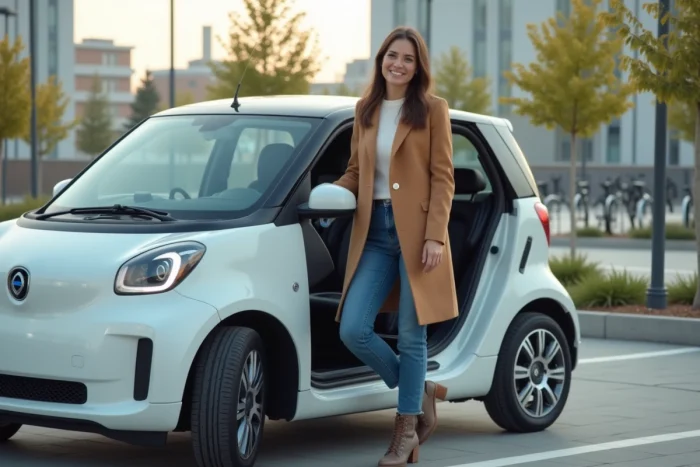
Electric vehicle sales increased by 47% in Europe in 2023, while some traditional manufacturers are slowing down their investments in combustion engines. Public aid schemes vary greatly between countries and regions, making the choice of electric vehicles sometimes more complex than expected.
At the same time, electricity prices are becoming less predictable, and the development of charging stations remains uneven. Between promises of innovation and ground realities, electric mobility reveals less obvious trade-offs than announced.
Electric car in 2024: where do we really stand?
The energy transition is no longer just a statement of intent. In France, six out of ten registrations of electric cars now come from companies. This shift is not coincidental: the expansion of low emission zones (LEZ), mandated by the State, reshuffles the cards of urban traffic and gradually restricts access for combustion vehicles to city centers. By 2035, most automakers will confirm the cessation of production of these models, accelerating the adoption of electric vehicles.
The study conducted by Alphabet and YouGov presents a clear finding: electric mobility is taking root in people’s minds. A majority of French people consider the electric car suitable for business trips. Acceptance is rising among young professionals and in large cities, while users already accustomed to alternative transport are more willing to make the switch. The climatic and economic relevance of electric vehicles, confirmed by ADEME, is now recognized by specialists.
Cost remains a decisive factor. In 2025, the average price of a new electric car will be between 35,000 and 40,000 euros, with a starting price around 22,000 euros for city cars. However, the array of aids, ecological bonuses, local subsidies, and tax credits opens new perspectives, particularly thanks to platforms like autonov.fr. On the ground, businesses and public authorities are shaping daily mobility that is rooted in reality rather than rhetoric.
What are the advantages and limitations for your daily commutes?
Adopting the electric car for daily use is not trivial. The first strength: zero CO2 emissions during use. This detail makes all the difference in cities where low emission zones dictate access to centers and where even minor pollution alerts restrict access for conventional vehicles. For many urban drivers, this equates to a freedom preserved where others see their journeys becoming more complicated.
On the financial side, the advantage is also significant. ADEME states that the maintenance of an electric car costs 30 to 40% less than a combustion model. Fewer parts to monitor. Fewer trips to the mechanic. And charging at home, made more affordable thanks to the Advenir subsidy and the tax credit (up to 500 euros in 2024), often halves, sometimes more, the fuel budget. The purchase price remains high, but public aids, ecological bonuses, clean vehicle microcredits, and social leasing open the way to more accessible solutions.
Main advantages
Here are the key points most users who opt for daily electric mobility retain:
- Range of recent models: between 300 and 600 km
- Charging at home or at public stations
- Reduced operating costs, tax exemptions for businesses
- Access to LEZ without restrictions
However, some realities dampen enthusiasm. Long-distance trips still require planning: one must anticipate charging, even if the network is expanding quickly. As for range, it is more than sufficient for daily round trips but may impose choices for those who drive a lot or live far from cities. And despite the arrival of more affordable models, the purchase price remains a constraint for many households.

Sustainable mobility and innovations: how electric cars are shaping the future
Sustainable mobility is no longer a pious wish. The electric car is taking its place, driven by increasingly strict regulations and a wave of technological innovations that are reconfiguring our travel habits. Batteries, the true engines of this transformation, are gaining in capacity and longevity. After their first cycle, they find a second life in renewable energy storage, then integrate into increasingly organized recycling streams.
In this context, the charging station network is densifying. Solutions are becoming faster and smarter. Home charging, public stations in cities, equipped highways: everything converges to make charging a routine action, far from the feared obstacle. Some players are already deploying connected stations, remotely controllable, to optimize energy management on a daily basis.
Innovation is also infiltrating our usage. Long-term rental offers are multiplying, new services are emerging, and the notion of car ownership is transforming. Models like the Renault 5 E-Tech or the Dacia Spring, omnipresent in 2025, embody this democratization of electric mobility.
The electric car, now, no longer just replaces gasoline with electricity. It is part of an ecosystem where each trip has less impact on the environment and where the city becomes more breathable, quieter. The mobility equation is changing: fewer constraints, more coherence, a transition that accelerates a little more each day. It remains to be seen how each person will seize this new freedom, as the next steps of the electric revolution unfold.