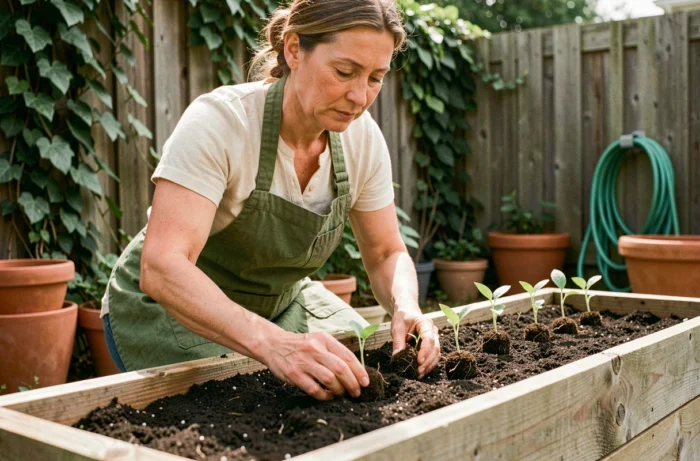
A raised garden bed is not filled like a flower pot. The layering of materials, the carbon/nitrogen ratio of the organic layers, and drainage directly affect the fertility of the substrate over several seasons. Here we discuss the technical points that make the difference between a productive bed and one that collapses within a few months.
Adapting the filling to the support: slab, clay soil, or draining soil
The first technical mistake is to apply the same filling recipe regardless of the installation context. A bed placed on a terrace or concrete slab must evacuate water through its drainage holes. If these perforations are insufficient or blocked by a geotextile that is too dense, water stagnates and the roots suffocate.
On clay soil, the situation is the opposite. Adding a layer of gravel at the bottom of the bed does not solve anything if the water cannot infiltrate into the underlying ground. In this case, we recommend a more aerated mix in the bed, with an increased proportion of structural materials (fragmented wood, coconut fibers) to compensate for the retention of the supporting soil.
On very draining sandy soil, increasing the amount of mature compost in the mix helps retain water and nutrients that would otherwise pass through the substrate without benefiting the crops. The composition of the filling should therefore be considered as a complement to the original soil, not as a universal formula. You will find additional explanations on the website laptitegraine.fr that details this adaptation logic.
Layering the raised garden bed: carbon/nitrogen ratio and order of layers
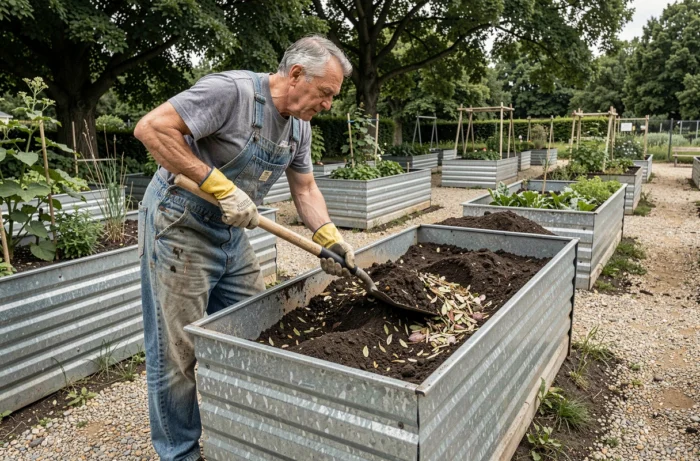
The principle of layering relies on the gradual decomposition of organic matter by soil microorganisms. The order in which you arrange the layers determines the speed of mineralization and the availability of nutrients for your crops.
Bottom layer: coarse carbon materials
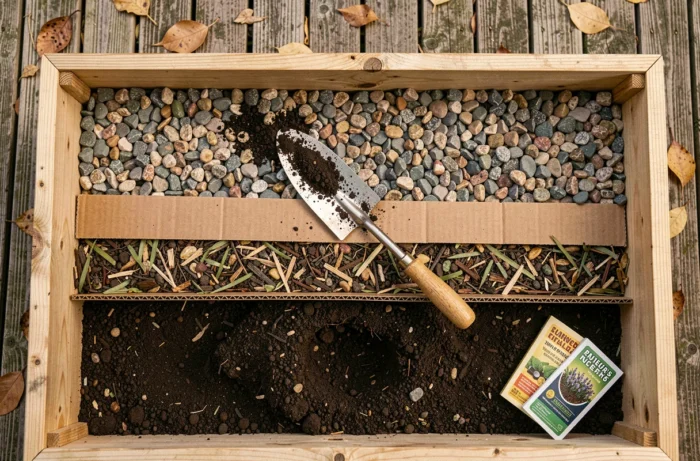
Branches, small-diameter logs, or chipped wood form the base. These materials with a high C/N ratio decompose slowly, create air pockets, and serve as a water reservoir. Wood acts like a sponge: it absorbs water during watering and gradually releases it.
Avoid treated wood, large quantities of softwoods (acidification), and pallet boards of uncertain sanitary origin.
Intermediate layers: organic waste and young compost
Above the wood, alternate layers of green waste (grass clippings, peels) and brown waste (dead leaves, unprinted cardboard, straw). This alternation maintains a balance between nitrogen and carbon that activates microbial life.
- Fresh green waste (low C/N ratio, rich in nitrogen): untreated grass clippings, vegetable kitchen scraps, vegetable tops
- Dry brown waste (high C/N ratio, rich in carbon): dead leaves, straw, chipped branches, corrugated cardboard without ink
- Young compost in the process of maturation, which continues its decomposition in situ and generates beneficial heat for the roots at the beginning of the season
Each layer should not exceed fifteen centimeters to allow for proper aeration. Lightly compact, water between each layer, then move on to the next.
Top layer: the planting substrate
The last centimeters accommodate the mix in which you plant directly. A blend of topsoil and well-decomposed mature compost, with a forest floor smell, provides immediate structure and fertility. This mature compost is distinguished from young compost by its homogeneous appearance and the absence of recognizable fragments.
Mulching and watering restrictions: a regulatory constraint to integrate
Mulching the raised garden bed is no longer just a comfort recommendation. In 2026, garden watering rules are defined locally according to four levels (vigilance, alert, heightened alert, crisis). Prefectural orders may impose plant mulching to maintain the right to water during restriction periods. Before installing your bed, we recommend checking the applicable level on VigiEau.
An organic mulch of a few centimeters (straw, hay, chipped material) serves three simultaneous functions: it limits surface evaporation, nourishes the upper layer of the substrate as it decomposes, and regulates soil temperature. In a raised bed, exposure to sun and wind accelerates drying much faster than in open ground. Deep and spaced watering is preferable to frequent and shallow watering, as it encourages roots to descend toward the moist layers of the bed.
Consider a rainwater harvesting system if your area is regularly subject to restrictions. A collection bed coupled with a watering can is sufficient for one or two raised garden beds.
Substrate compaction: anticipating volume loss after filling
A raised garden bed loses a significant portion of its volume during the first season. The decomposition of organic layers and natural compaction cause a settling that many gardeners discover too late.
- Fill the bed to the edge during the initial setup, knowing that the level will drop
- Plan to add mature compost on the surface in the fall to compensate for volume loss and rejuvenate fertility
- Avoid stepping on the substrate or leaning on the edges: compaction reduces porosity and hinders drainage
An annual replenishment of organic matter maintains the height of the substrate and renews the nutrients exported by the harvests. This simple action conditions the long-term productivity of the bed.

The durability of a raised garden bed depends less on the choice of the bed than on the quality and consistency of its filling. A layered substrate, adapted to the supporting soil and properly mulched, produces results from the first season, provided that the inevitable settling and local watering constraints are anticipated from the start.