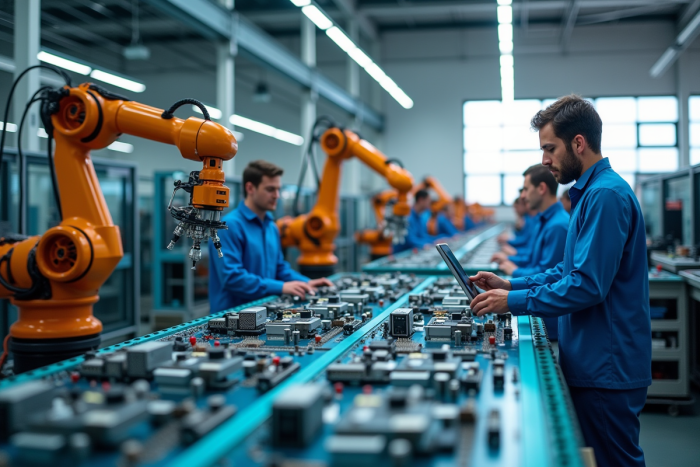
A figure, and everything wobbles: 54 billion euros. This is the amount injected by France into the digitization of its industry, proof that the technological shift is no longer an option. Whether a small business or a giant in the sector, every player feels the pressure rising. The urgency is not feigned: against the backdrop of international competition, modernizing production chains is essential for those who want to keep pace. Smart sensors and predictive analytics are no longer the exclusive domain of the giants. Now, the transition is accelerating across the entire industrial fabric.
From the deployment of collaborative platforms to advanced robotics, initiatives are multiplying. The goal: to gain efficiency, but also flexibility. This revolution in production methods is not limited to the installation of new machines. Automation and connectivity are transforming the daily lives of factories, demanding an unprecedented adaptability from teams. Jobs are evolving. Business models are too. In the face of the digital wave, no link is spared.
Industry 4.0: understanding the revolution of smart production
Industry 4.0 does not simply refresh old models. It imposes a break, a complete overhaul of traditional approaches. Digitization of processes, cutting-edge automation, artificial intelligence… Everything contributes to disrupting the value chain. To embark on the path of the smart factory, every step of the industrial journey must be rethought. In France, ambition is reflected in the numbers: 54 billion euros from the France 2030 plan directed towards digitization, quantum research, and health. This funding propels companies towards more connected, agile, and above all, more sustainable models.
But the stakes go far beyond modernizing tools. Industry 4.0 shakes up habits at all levels: workers, engineers, executives… Everyone is invited to redefine their role within organizations that place humans at the heart of the system. The adoption of cutting-edge technologies is just one aspect. System security, continuous learning, standardization of practices, and change management become major axes of transformation. Germany, with its Industry 4.0 platform, and Switzerland, through Industry 2025, are showing the way by structuring and pooling efforts to ensure security and interoperability.
This upheaval is also embodied in data management. Real-time analysis, optimization of chains via AI & Analytics, or increased product personalization transform the way to satisfy customers. Digitizing also means creating new jobs, bringing forth unprecedented skills, but also raising questions about governance and technological sovereignty. The industry of the future leverages connectivity to enhance its flexibility, reduce its environmental impact, and stay in the race. The transformation is not limited to the production apparatus: it leaves its mark on corporate culture, from management to the shop floor.
What technologies are concretely transforming factories today?
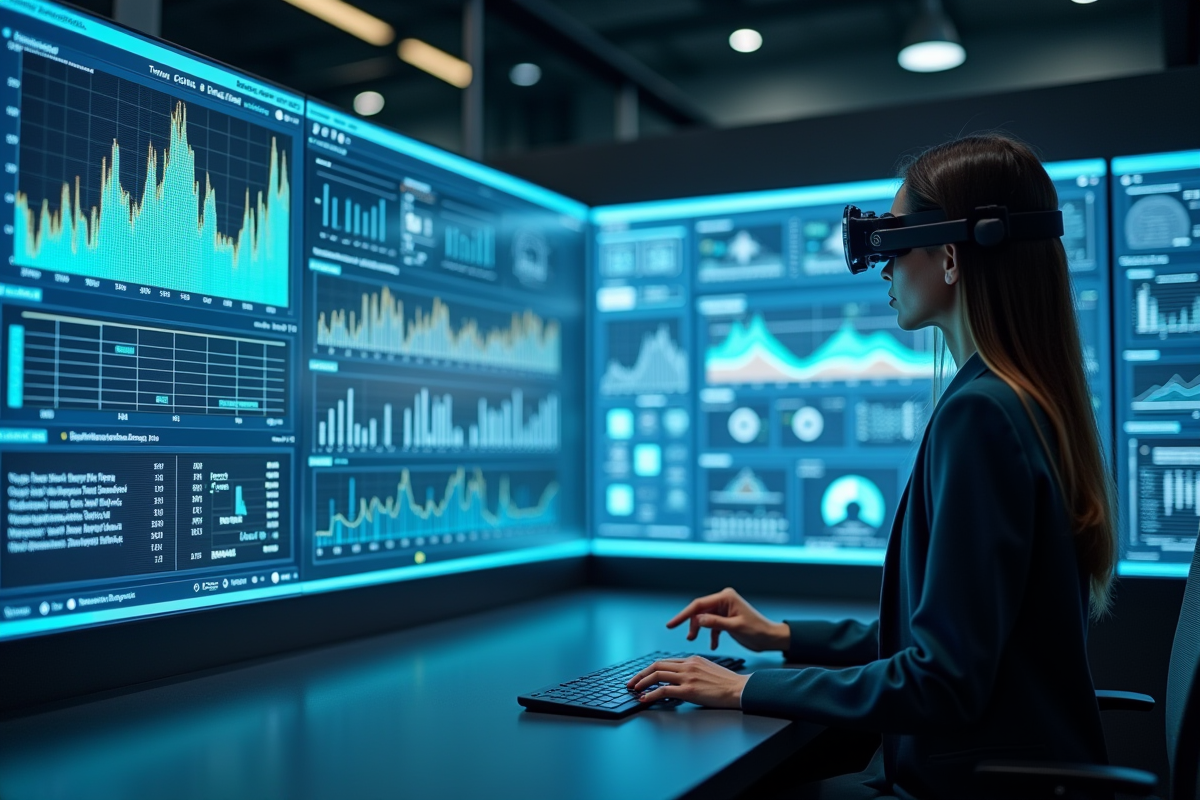
The impact of the digital revolution is measured by the technologies that are making their way onto the field. Connected objects, whether IoT or IIoT, continuously monitor the state of machines, collect data, and prevent incidents. Sensors scattered across production lines feed central systems. The result: a constant flow of information, exploited by data analytics and big data tools. Now, intuition gives way to fact-based decision-making, in real-time.
Artificial intelligence and machine learning play a decisive role. They model behaviors, anticipate failures. Predictive maintenance helps avoid unplanned downtimes. Collaborative robots, or cobots, work alongside operators, without physical separation, enhancing human-machine cooperation.
3D printing and additive manufacturing enable customization and speed. Augmented reality and digital twin technologies facilitate training and decision-making, simulating and anticipating production situations. As for edge computing, it processes data directly on-site, reducing latency and dependence on the cloud.
To better grasp the extent of these changes, here are the main advancements redefining production:
- Cyber-physical systems: the boundary between the real and digital worlds fades, allowing for seamless interaction.
- Data collection and analysis: the foundation for ongoing optimization and increased responsiveness.
- Automated production lines: harmonious integration of advanced technologies for maximum efficiency.
The digital transformation of workshops is no longer a distant prospect. It is becoming part of everyday life. Manufacturers who seize these levers build their competitiveness on speed, rigor, and the ability to pivot. The movement has begun, and the train of Industry 4.0 will not pass by twice.