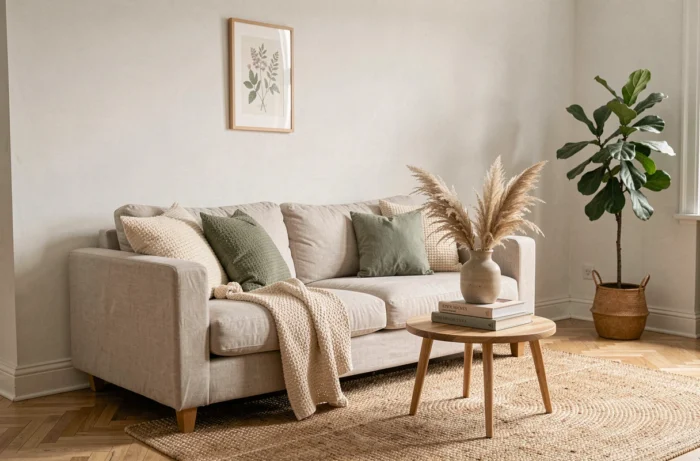
An interior that looks dated doesn’t always suffer from a lack of taste. More often, it’s the result of a series of choices that were never properly considered: materials that clash, a single ceiling light, furniture left where it happened to fit on moving day. Transforming your home starts with identifying these inconsistencies, not buying new things.
Rental restrictions and reversible decorating ideas
Renters can’t knock down a wall or retile a floor. These practical limitations call for reversible changes with a strong visual impact. When chosen carefully, the results can rival a structural makeover.
Removable, repositionable coverings (click-lock vinyl flooring, removable backsplash panels) can radically transform a kitchen or bathroom without altering the property itself. They can be removed at the end of a lease without leaving a trace, provided you choose products designed for this purpose rather than ordinary decorative contact paper.
When it comes to walls, paint is the most powerful tool. Most leases allow painting as long as the property is returned in a neutral color. Painting just one wall in a rich shade (terracotta, tobacco brown, sage green) is enough to visually reshape an entire room.
A collection of decorating ideas suited to these restrictions is available at https://www.justindeco.fr, with recommendations organized by room type and style.
Openwork screens and room dividers are another underrated option. Set up without permanent fixtures (weighted or held in place with tension), they create distinct zones in a studio or multipurpose living room, without reducing natural light or visual continuity.
On-trend colors and materials to refresh a room
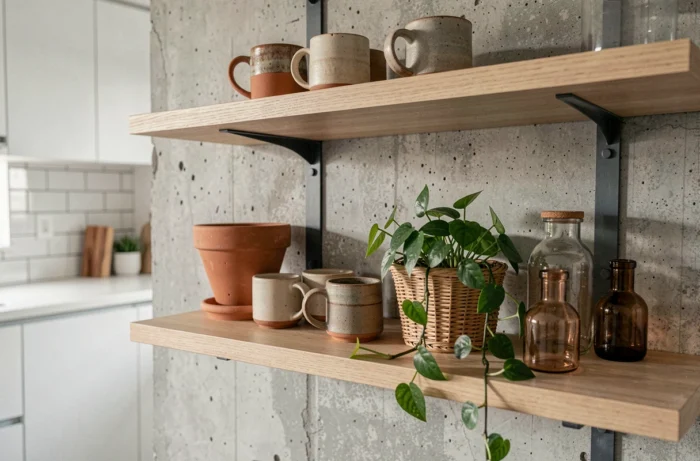
Growing weariness with all-neutral interiors is becoming clear. Terracotta and tobacco brown are gaining ground in living spaces, alongside a return to chrome and brushed steel finishes.
Introducing these materials and colors doesn’t mean redoing all your decor. Here are three practical ways to get started:
- Swap out a gray or white scheme with cushions, throws and linen or corduroy curtains in warm tones. For a standard-sized living room, plan on four to six textile pieces.
- A brushed-metal light fixture (wall light or table lamp) adds a contemporary touch without electrical work, as long as you choose a plug-in or battery-powered model.
- A rug with a pronounced texture (looped wool, woven jute) anchors a living area in an open-plan space better than any piece of furniture could.
Pairing no more than two contrasting materials in each room helps avoid a cluttered look. Light wood and black metal work well together. Light wood, black metal, rattan, marble and velvet in the same living room—not so much.
Repurposing furniture and choosing durable pieces over disposable decor
The habit of buying something new every time you want a change can leave interiors looking dated after just two seasons. Repurposing furniture, on the other hand, encourages you to rethink what you already own before buying more.
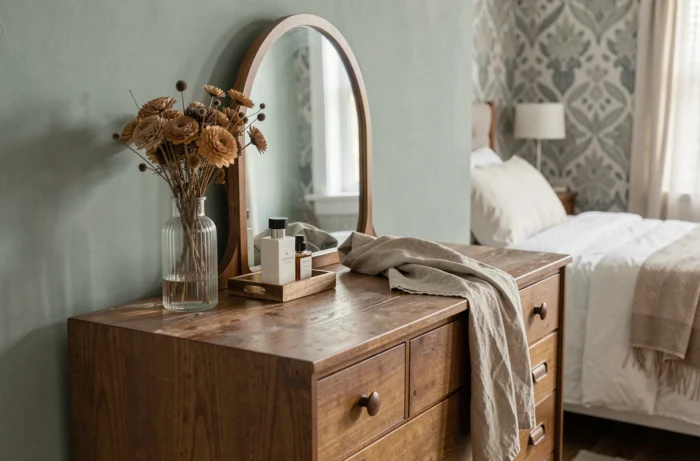
A piece of furniture can serve a different purpose from the one it was designed for. A bedroom dresser can become an entryway cabinet. A side table can be raised with replacement screw-on legs and used as a console table. Moving a piece of furniture from one room to another costs nothing and changes the visual flow.
Secondhand shopping also gives you access to higher-quality pieces for the same budget. A vintage solid-wood armchair found at a flea market will withstand several moves, while a new particleboard chair may lose its shape within two years.
Before buying anything, try this simple test: could this item work in an interior with a different style? If the answer is yes, it will stand the test of time. Pieces strongly tied to a particular aesthetic (ultra-thin hairpin legs, highly distinctive geometric patterns) are the first to look dated.
Coordinating decor and thermal comfort on the same budget
Since January 1, 2025, homes rated G on the DPE energy performance scale have no longer been considered decent for new leases, renewals or automatic extensions. Ratings F and E will follow according to the legal timetable. For a landlord considering a cosmetic refresh, separating decorating from energy-efficiency upgrades means paying twice.
Some decorating choices can directly improve thermal comfort. In addition to their aesthetic appeal, heavy thermal curtains reduce heat loss through windows. A thick rug on a cold tiled floor makes it feel more comfortable underfoot without changing the flooring.
Conversely, interior insulation work changes wall thickness and therefore affects the placement of furniture, outlets and light fixtures. Planning the decor after this work avoids having to readjust everything.
- If the home is rated F or G, prioritize the thermal envelope before making major decor purchases (a sofa, a custom bookcase).
- If the home is properly insulated, the decor budget can go entirely toward interior furnishings.
- In either case, heavy textiles (lined curtains, wool throws) are a dual-purpose investment, both aesthetic and thermal.
Layered lighting: the most overlooked variable in interior design
A single ceiling light flattens a room and eliminates depth. Three light sources at different heights are enough to transform a room’s atmosphere: indirect overhead lighting (an LED strip on a shelf), a mid-level source (a wall light or floor lamp), and low-level accent lighting (a table lamp or candle).
Color temperature matters just as much as brightness. For living spaces, stick to between 2,700 K and 3,000 K to avoid the clinical feel of overly white lighting. Exposed-filament bulbs, hugely popular a few years ago, are starting to look dated. Choose lampshades made from natural materials (raffia, linen) instead; they diffuse light warmly without dating the room.
A plug-in dimmer, compatible with most table lamps, lets you switch from functional lighting to a softer mood without changing the bulb. It costs just a few dollars and can radically change how a room is used from day to evening.
The most successful interior isn’t the one that follows the most trends; it’s the one where every element has been chosen to last and serve a real purpose. Three thoughtful changes are better than a complete makeover you’ll have to redo in eighteen months.