
A forgotten pack of bacon bits at the back of the refrigerator is the kind of discovery that generates immediate doubt. The date printed on the packaging only tells part of the story. Between the moment the pack was opened, the actual temperature of your fridge, and the condition of the plastic wrap, several factors speed up or slow down the degradation of expired bacon bits. Knowing how to spot them helps avoid both unnecessary waste and the risk of food poisoning.
Bacon bits in modified atmosphere: what happens in the packaging after opening
You may have noticed that the bacon bits seem intact as long as the pack remains sealed, then change quickly once opened? This is not a coincidence. Modified atmosphere packaging replaces ambient air with a gas mixture low in oxygen, which slows down the multiplication of aerobic bacteria.
As soon as the film is pierced or removed, oxygen comes into contact with the meat. The bacteria naturally present on the surface of the bacon bits find favorable conditions again. The speed of proliferation then directly depends on the ambient temperature.
If you’re looking for how to tell if the bacon bits are expired after opening, remember that an opened pack kept in the refrigerator is only reliable for a short period, even if the displayed expiration date has not been reached. An opened pack degrades faster than the expiration date suggests.
A detail often overlooked: folding the film with a rubber band does not recreate the original protective atmosphere. Air has already entered. It’s better to transfer the remaining bacon bits into an airtight container or a freezer bag emptied of as much air as possible.
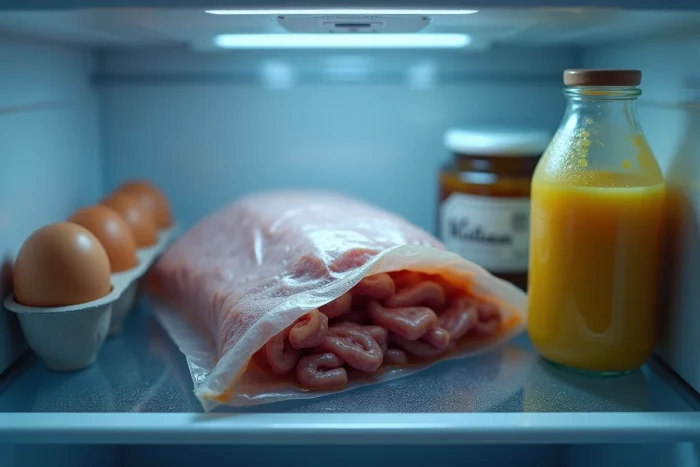
Smell, texture, and color of bacon bits: three checks to do in this order
Visual inspection alone is not enough. Some bacteria, particularly Listeria monocytogenes, do not change the appearance or color of the product. The 2024 report from Santé publique France cites packaged salted pork products in modified atmosphere as frequent vectors of Listeria contamination. That’s why it’s essential to combine several senses, in a specific order.
Smell first
Before even touching the bacon bits, bring your nose close to the opened pack. A sour, sulfurous, or ammonia-like smell indicates advanced degradation. Fresh bacon bits emit a slight smell of smoked or salted meat, never acidic. If the smell makes you recoil, the question is settled.
Texture next
Take a bacon bit between two fingers. A sticky surface or a slimy film indicates bacterial proliferation on the surface. A sticky feel is a reliable warning sign, even without a marked odor. Fresh bacon bits remain slightly moist but never slimy.
Color last
Good quality bacon bits display a pink to light red hue for the lean part, and cream white for the fat. A shift towards gray, greenish, or brown on the lean part indicates oxidation or microbial colonization. Fat that turns strongly yellow is also a marker of rancidity.
Here are the signals to remember for each sense:
- Sour, sulfurous, or ammonia-like smell: throw away immediately, without tasting or cooking the product.
- Slime or stickiness on the surface: bacterial proliferation is already well established, even if the visual appearance seems correct.
- Grayish, greenish color on the lean part or pronounced yellowing of the fat: the product has exceeded the stage of safe consumption.
Expired expiration date on bacon bits: the real margin depending on the type of storage
The expiration date printed on bacon bits is a consumption deadline, not a minimum durability date. The DGCCRF classifies bacon bits and fresh deli products in the “mandatory expiration date” category, which means that no official safety margin exists after the expiration date has passed.
In practice, the actual state of the product depends on the cold chain. A refrigerator set above the recommended temperature accelerates bacterial multiplication. Most household refrigerators do not maintain a uniform temperature throughout all areas, and the door (where many store their bacon bits) is the warmest area.
Some concrete guidelines:
- Unopened pack, well-set fridge, expiration date exceeded by a few hours: the sensory checks described above remain relevant, but caution is advised.
- Opened pack for several days, even before the expiration date: the microbiological risk increases significantly. Smell and texture checks take priority over the date.
- Bacon bits frozen before the expiration date: freezing stops bacterial multiplication but does not kill bacteria already present. After thawing, consume them quickly and never refreeze.

Cooking suspicious bacon bits: what heat eliminates and what it leaves
A common idea is to cook questionable bacon bits for a long time thinking it neutralizes the danger. The reality is more nuanced. Cooking at high temperature does indeed destroy some living bacteria. However, some bacterial toxins survive cooking heat.
Staphylococci, for example, produce heat-stable toxins. Even after a well-executed pan cooking, these toxins remain active and can cause vomiting and abdominal pain. The problem does not always come from the bacteria itself, but from what it produced before being destroyed.
Listeria monocytogenes is sensitive to heat, but it poses a particular danger to pregnant women, the elderly, and immunocompromised individuals, even in small amounts. The 2024 report from Santé publique France highlights an increase in cases involving refrigerated deli meats contaminated with this bacteria.
Cooking does not compensate for poor storage. If sensory checks reveal an anomaly, cooking the product does not guarantee its safety. The safest reflex remains to throw away bacon bits that show at least one warning signal among smell, texture, or color, regardless of the cooking method considered.
Storing bacon bits in the coldest part of the refrigerator, sealing tightly after each use, and respecting the expiration date remain the only actions that truly protect. A pack that costs only a few euros does not justify a trip to the emergency room.