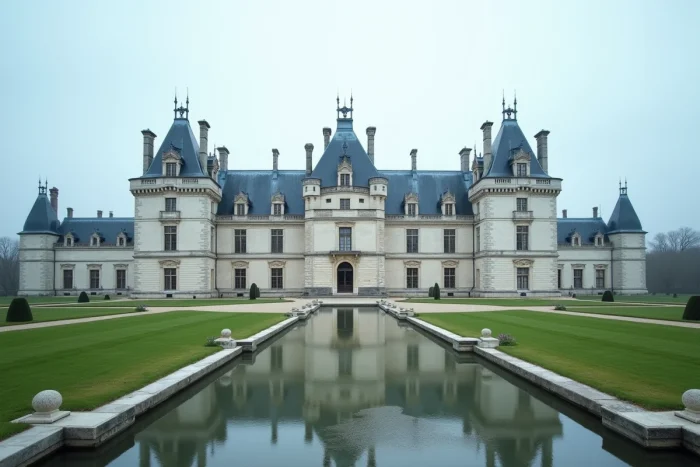
The Château de Chambord attracts hundreds of thousands of visitors each year. This monument of the French Renaissance fascinates as much for its proportions as for the shadows surrounding its design. Understanding what makes it valuable involves intersecting architecture, royal strategy, and the recent evolution of the tourist offer.
Entry fee to Chambord and combined multi-castle offers
Are you planning a visit and wondering what budget to set aside? The Chambord estate offers a standard entry ticket, but also bundled packages that deserve attention.
The estate is now included in combined multi-castle offers sold by tourist platforms. These passes allow you to visit Chambord along with other major sites in the Loire Valley, such as Chenonceau or Chaumont-sur-Loire, at a more advantageous overall price than buying each ticket separately.
Another recent feature: Chambord applies a differentiated rate for visitors residing outside the European Economic Area on certain passes, such as the “Trio Royal” offered through Orléans Val de Loire Tourism. This pricing segmentation is still poorly documented in traditional guides. It reflects a trend observed in several major European heritage sites.
To delve deeper into the topic of the price and history of the Château de Chambord, one must also consider the heritage value of the estate itself, which far exceeds the cost of a ticket.
Construction of the Château de Chambord: a political as well as architectural project
In 1519, François I initiated the construction of Chambord in Sologne, on marshy land. The choice of site is no coincidence: it is about asserting royal power through a spectacular architectural gesture, visible and isolated.
The château was never designed as a permanent residence. François I only stayed there for a total of a few weeks. The building primarily served as a diplomatic showcase, presented to ambassadors and foreign sovereigns as a demonstration of power inscribed in stone.
The influence of Leonardo da Vinci on the design
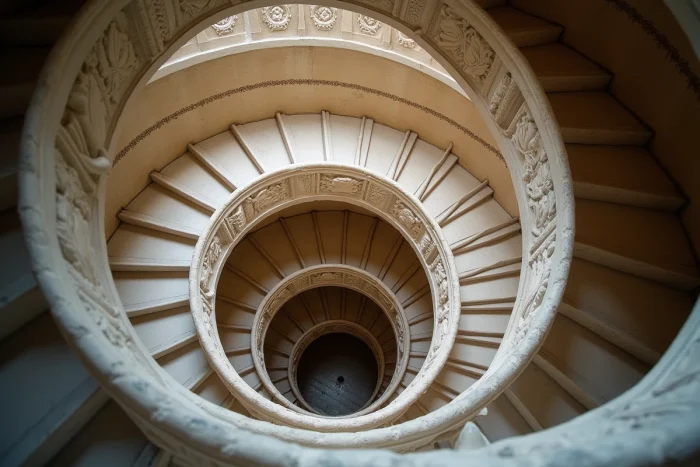
The role of Leonardo da Vinci in the design of Chambord remains a subject of debate. The artist died before the work began, but his influence is perceptible in the centered plan and in the famous double spiral staircase. This ascending spiral, where two people can ascend and descend without crossing paths, concentrates a significant part of the château’s fame.
Pierre Nepveu, a master mason, played a crucial role in the concrete realization of the project. He integrated typical elements of the Italian Renaissance while adapting the plans to the constraints of the Sologne terrain.
A royal budget for a symbol
François I’s expenditures for his châteaux could reach considerable sums. The context helps to put this into perspective: only about 1% of the state budget during his reign was dedicated to construction policy. An army on campaign for a year cost incomparably more. The builder king had no less than eleven châteaux remodeled or built in Île-de-France and the Loire Valley alone.
Double spiral staircase and terraces: what makes Chambord unique
Why is this staircase so fascinating? Its design is based on two intertwined helices around a hollow core. This principle allows two people each taking a flight of stairs to sense each other through openings without ever meeting on the steps.
The staircase constitutes the central axis of the château. The entire plan is organized around it, according to a rigorous symmetry. Ascending, it leads to the terraces, an open-air space from which one can discover the profusion of chimneys and sculpted capitals that crown the building.
- Double spiral staircase: two superimposed helical ramps, attributed to the inspiration of Leonardo da Vinci
- Summit terraces offering a view of the park and allowing close observation of the sculpted details
- Greek cross plan centered on the keep, with four corner towers, a rare organization for the time
- Exterior decor mixing Italianate motifs and French traditions, visible on the dormers and pilasters
This combination of technical ingenuity and architectural staging explains why Chambord remains a case study in the history of Renaissance art.
Chambord in 2025: cultural programming and new visiting experiences
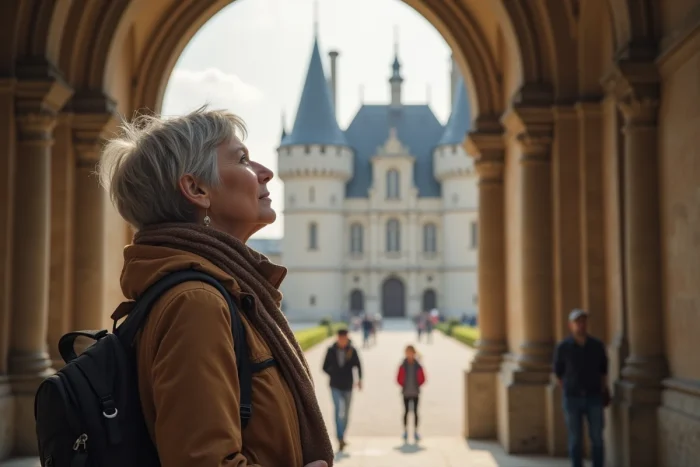
The visit to Chambord is no longer limited to a tour of the château’s rooms. The estate has developed an event programming that changes the very nature of the experience.
Among the recent formats, “Les Étoiles au château” offers evening events, with performances in a nighttime setting. The Chambord Festival 2026 confirms this orientation towards a structured artistic season, with creations designed for the location.
This active cultural positioning distinguishes Chambord from most of the Loire châteaux, often confined to the classic heritage visit. The national estate relies on lively formats to renew its audience and attract visitors beyond mere historical discovery.
- Evening shows and events within the château grounds
- Artistic seasons with dedicated programming (festival, creations)
- Expanded offer beyond free visits, including immersive experiences
The park itself, one of the largest enclosed spaces in Europe, hosts walks, wildlife observations, and outdoor activities that complement the indoor visit.
Chambord remains a monument whose value is hard to quantify in numbers. Its entry price grants access to a building whose construction mobilized thousands of workers over decades, whose plan still intrigues architects, and whose current programming proves that a 16th-century château can remain a vibrant place. A visit to the Loire Valley deserves more than just half a day dedicated to it.