
A dashboard, two contradictory notifications, and a missing resource: for many teachers, academic merging does not seem like a beautiful promise of harmonization, but rather a daily puzzle. Since 2020, several French academies have profoundly modified their course management platforms, creating breaks in usage and access to digital tools for teachers. The harmonization of digital work environments does not systematically lead to a standardization of practices.
Some teachers find themselves having to deal with several parallel systems, each coming with its own rules, training processes, and technical requirements. It is not uncommon for a digital resource, validated in one department, to suddenly become inaccessible due to incompatibility or a change in policy. This constant shift imposes new reflexes: keeping up with updates, adapting to sometimes unfamiliar platforms, and reformulating teaching habits. The need for support is multiplying, just as the expectations regarding the interoperability of tools are increasing.
Digital transformation in middle schools: what changes for teaching practices?
The academic merger disrupts the landscape of educational technology in middle schools. Teaching teams must now navigate between revamped portals, renewed management spaces, and rethought sharing methods. The centralization of databases transforms access to educational resources and modifies the way teachers collaborate on a daily basis. But the issue goes beyond mere technical questions: it challenges the entire classroom dynamic, the relationship with technology, and the evolution of teaching practices.
With the convergence between Orléans and Tours, the pooling of content and management of learning take on a new face. Personal work materials are changing, video is establishing itself as a full-fledged teaching tool, and social networks are finding their place in the animation of student groups. On the ground, training in information and communication technologies is accelerating, and tools like video games or artificial intelligence are making their way into learning sequences. This transformation comes with new challenges for teachers, involving experimentation, questioning, and constant adjustment.
Here are the major changes observed in institutions:
- Adaptation of digital tools according to local specificities.
- Reorganization of collaborative workspaces between middle and high schools.
- Emergence of new modalities for monitoring students’ personal work.
As these evolutions unfold, the question of the stability of digital resources and the compatibility of applications arises every day. The scale of the deployment of these technologies across an entire academy invites a rethinking of how to learn-teach, from middle school to high school, within a logic of diversity, sustainability, and renewal of working methods.
Tools, training, and innovations: how teachers adapt to the digital age
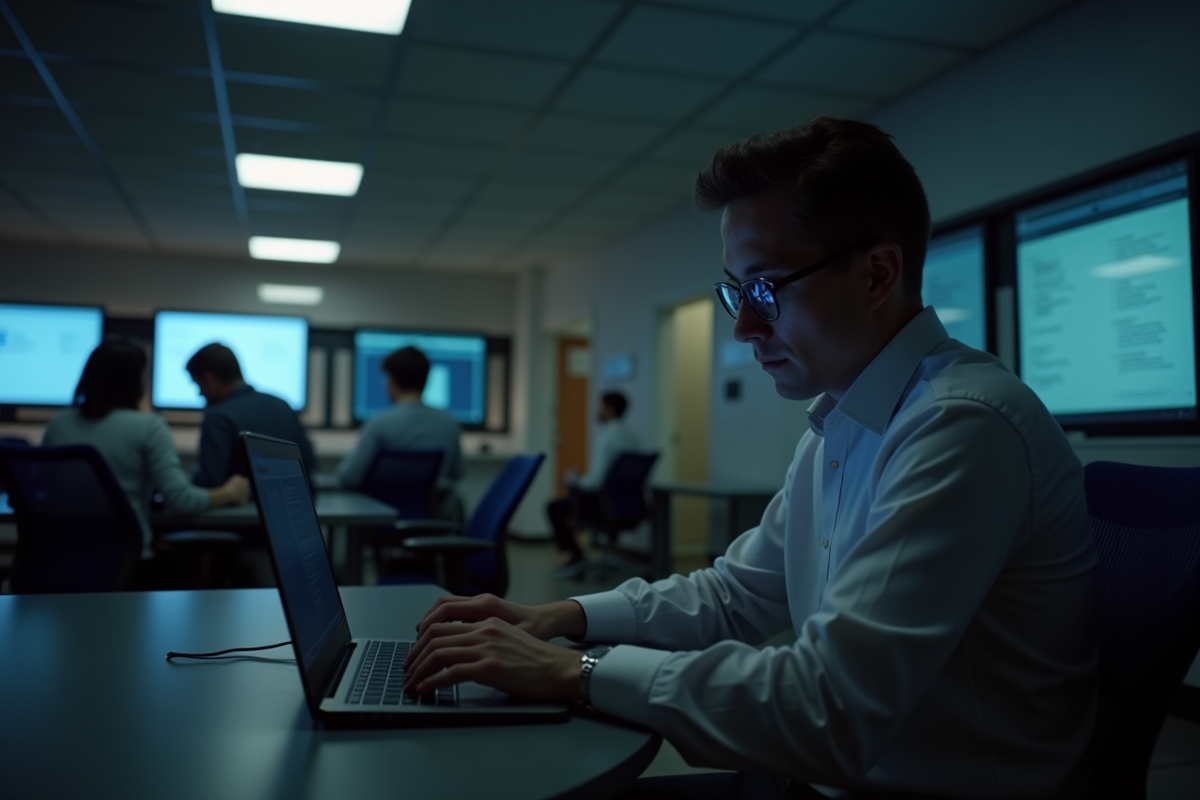
The academic merger places teachers in front of a vast digital transformation project. Tools are evolving: rethought applications, unified platforms, and strengthened requirements in cybersecurity. This transformation is accompanied by the development of hybrid training: online self-training, in-person seminars, and interactive modules on demand. Digital skills are becoming more pronounced, with the Pix certification now marking the professional journey of many teachers.
The initiatives driven by the Ministry of National Education, led by educational digital territories, are transforming daily support. Teachers are experimenting, adapting, innovating: integrating artificial intelligence into learning, using open online courses, and enhancing exchanges through new collaborative environments. This dynamic fosters the emergence of new practices, as well as a more effective pooling of resources.
Some key aspects of this adaptation:
- Development of certified digital skills
- Experimentation with distance learning and personalized learning
- Continuous adaptation to technological evolution
In Lyon and many other academies, the merger is not just about changing tools. It pushes for a rethink of continuous training, revisits digital teaching practices, and requires teachers to find new ways to enrich their teaching. In the face of the abundance of resources and solutions, the entire relationship with the student is being reshaped in this changing landscape.